

How to Use Metaphors in Presentations
A simple moment that changed the room
A while back, someone in my class started a presentation in a way I still remember.
He started by describing the background of his research—big challenges we all recognize: climate change, inequality, health crises—and the growing need for collaboration across sectors. So far, nothing unusual.
Then he paused and said:
“When I was young, my mother used to make her own mayonnaise…”
Suddenly, the room shifted.
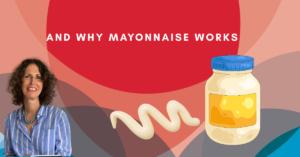
The mayonnaise metaphor
He described how ingredients that don’t naturally mix—oil, eggs, vinegar—somehow come together through the right process to form a smooth, cohesive whole.
And then he made the connection: collaboration is the same.
Different people, organizations, and interests don’t automatically blend. Without the right structure, they fall apart. With it, they work.
That’s the power of a metaphor.
Why metaphors work in presentations
In just a few sentences, it does three things:
- Makes the abstract tangible
- Grabs attention immediately
- Sticks in your audience’s memory
You may forget frameworks or statistics. But you won’t forget mayonnaise ;-).
And that’s exactly the point.
How to use metaphors in your own presentation
So here’s a question: can you still recall presentations simply because of a strong metaphor or slogan? Chances are—you can.
Take a few minutes before your next presentation and ask yourself:
What metaphor could carry my message?
Let it develop
Then let it sit. Let your mind work on it.
Talk it through with others—or even ask AI. Often, the best ideas don’t come instantly… they drop in a day later.
From idea to impact
And when they do, you won’t just have a message.
You’ll have something people remember.
Good luck!
Find more about my trainings here.